
Today a poem went live in Folded Word’s #WrittenWordWednesday series that was written by a poet who lives in Pakistan. Since PayPal accounts are restricted there (thus no way to pay her royalty), I was… More
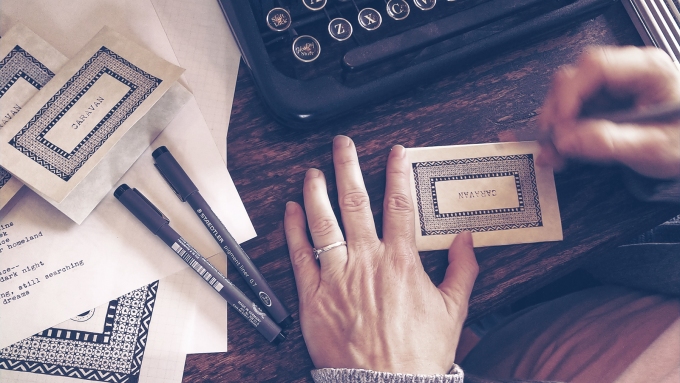
where all my creative pursuits gather
Today a poem went live in Folded Word’s #WrittenWordWednesday series that was written by a poet who lives in Pakistan. Since PayPal accounts are restricted there (thus no way to pay her royalty), I was… More
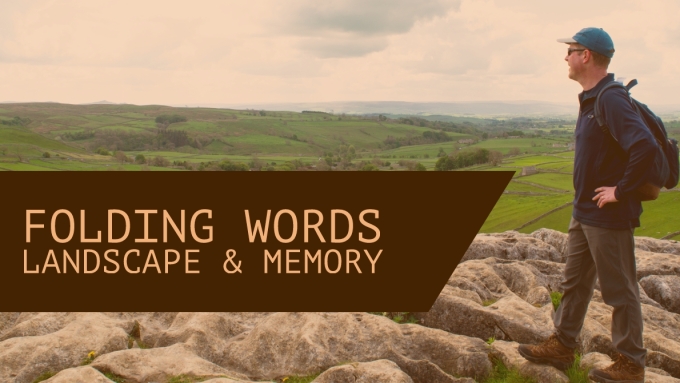
If you’ll be in the Lakes Region the first week of April, come write with me on 4 April 2019, 6:00-8:00 p.m. at the Meredith Community Center. We will explore the intersection of landscape and… More
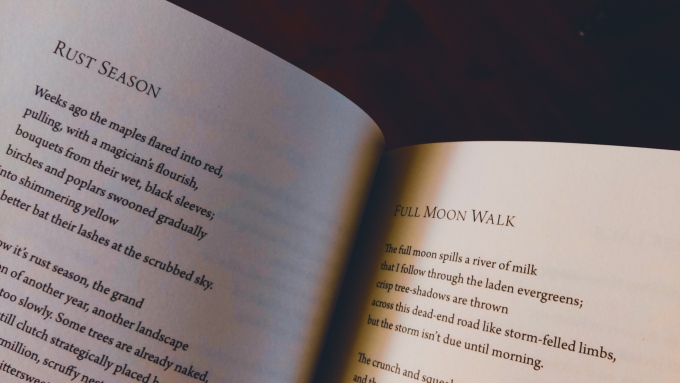
Beating the Bounds by Liz Ahl My rating: 5 of 5 stars Liz Ahl’s poetry is always beautifully crafted, but this collection in particular is a stunner. The strength of the collection lies in her… More
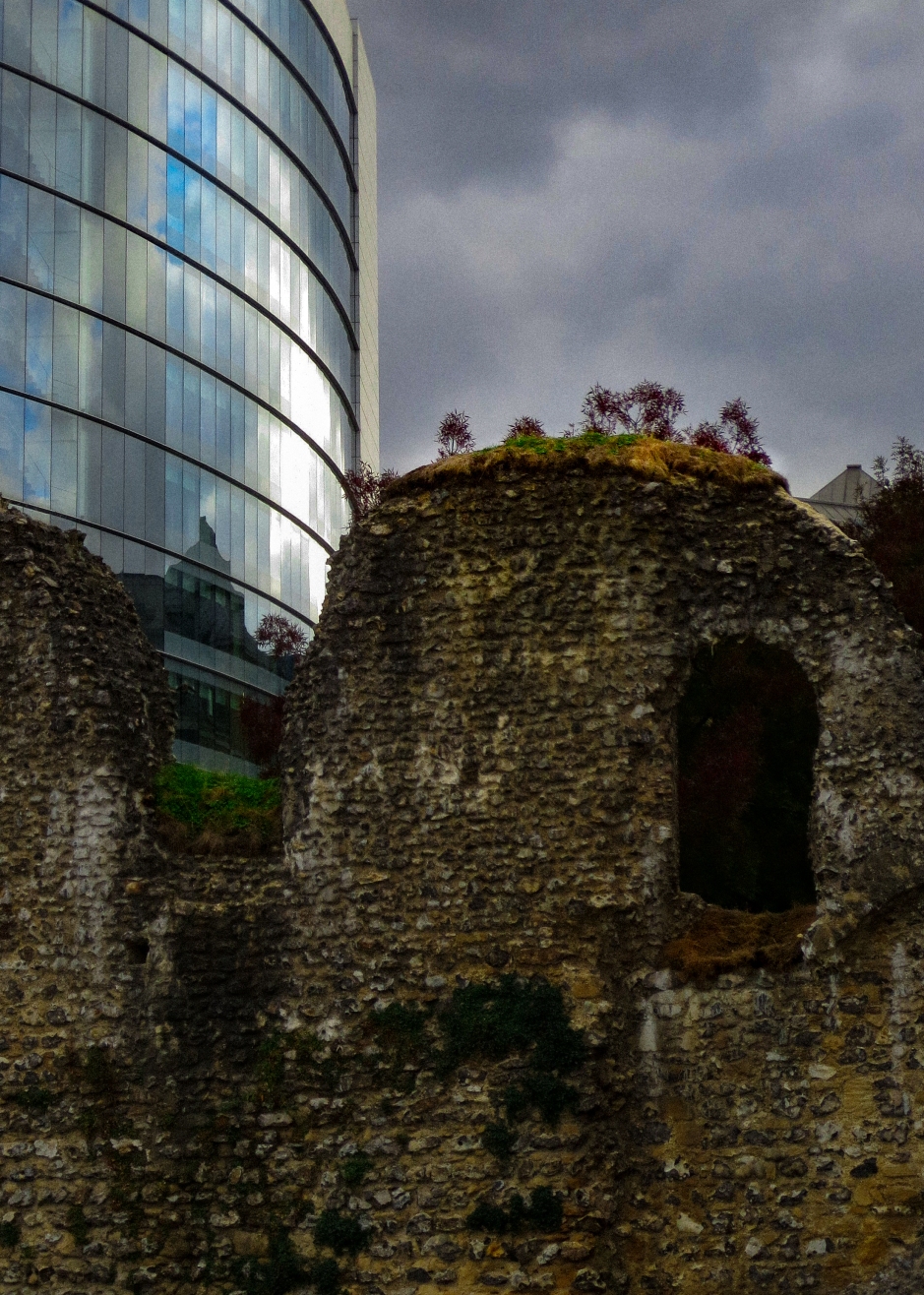
While Sitting in the Remnants of Reading Abbey on the UK’s National Poetry Day
4 October 2018, England
Above the flint-filled ruins and
The Blade, a Red Kite
glides ‘round on thermals, never lands
or feasts within this site
of dissolution. Two Magpies, though,
pick at the only flesh on abbey’s bones:
a wall-top meadow that centuries have sown.
©2018 by JS Graustein
Poem patterned after the second stanza of Tudor-poet Henry Howard’s “Complaint of the Absence of Her Love Being Upon the Sea.”
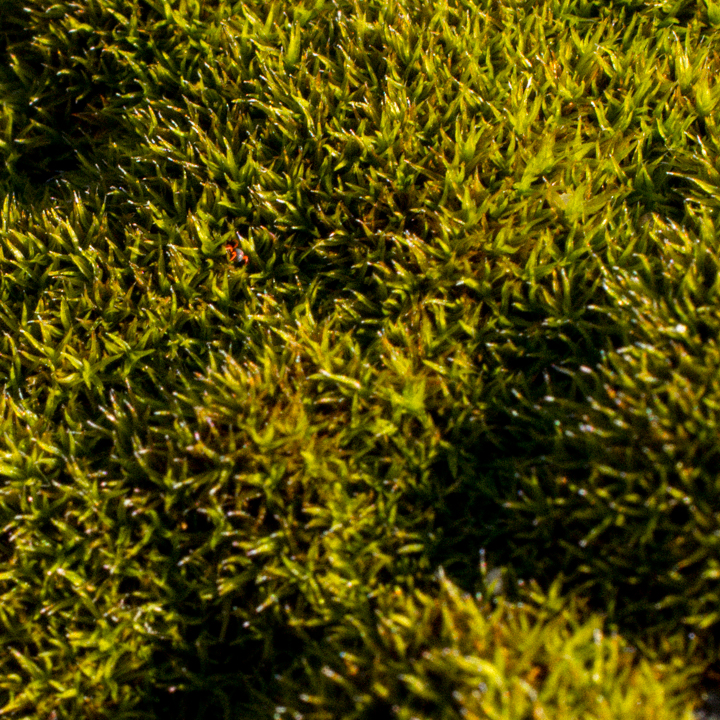
I’ve decided to join Dorothee Lang in a social creativity project next month. I realize that it kicks off during National Poetry Month and I *should* be attempting a NaPoWriMo challenge, but I’m in the middle of an intense round of typesetting + book-launching : finishing Folded Word’s spring list. I just don’t have the head space for composing my own poems while working so intimately with other people’s collections.

I’ve been fascinated with macro photography for years, but focusing and getting a tripod to work with my desired subjects never really came together for me. Now I have a Nikon DSLR that has a swivel screen, though, so I can see what I’m composing without looking through my bifocals through the viewfinder. That and my travel tripod that sits low on the ground have me armed and dangerous! I’ll start out at ISO 400 and f22 with stationary subjects, then see where the 100 days take me.
I’m really hoping this is as helpful as my self-portrait project back in 2012. If you want to join in, be sure to use #the100dayproject on Instagram. Pick something artistic you want to practice for 5 minutes a day every day and go for it!
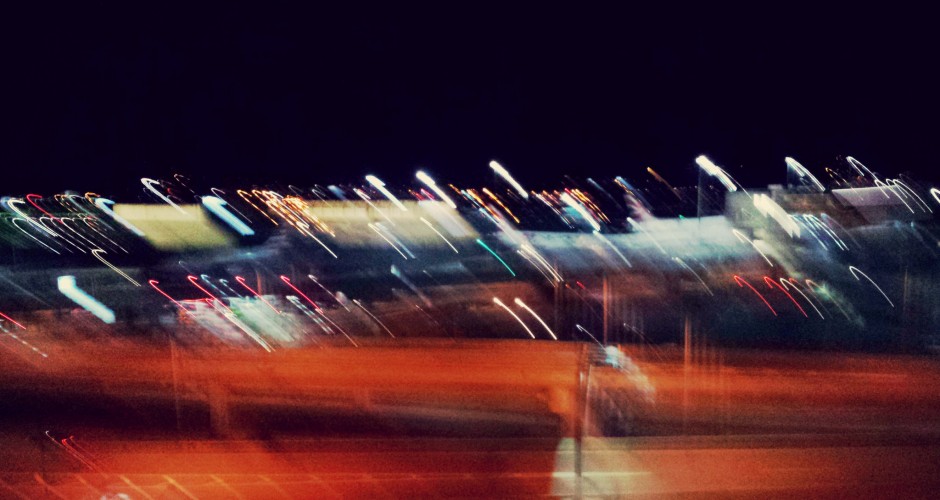
I’m not sure why I can’t stay put — why I always need to be planning the next trip to [insert destination here]. I adore my house on wooded acres, tucked into the hills above a tourist destination. Maybe I caught my grandad’s wanderlust that he caught from his dad’s work on the railroad. Maybe it’s genetics, stemming from the same urge that drove my ancestors to trade one continent for another. But it’s more likely a by-product of moving: having so many loved-ones in such a long string of scattered places. Social media is fine for keeping up with the facts of someone, but it’s no replacement for real-time bonding with someone over a shared meal. Even as a child, my parents made sure we traveled on what little discretionary funds we had to maintain the relationships that were important…relationships I would later rely on after my parents left for Africa.
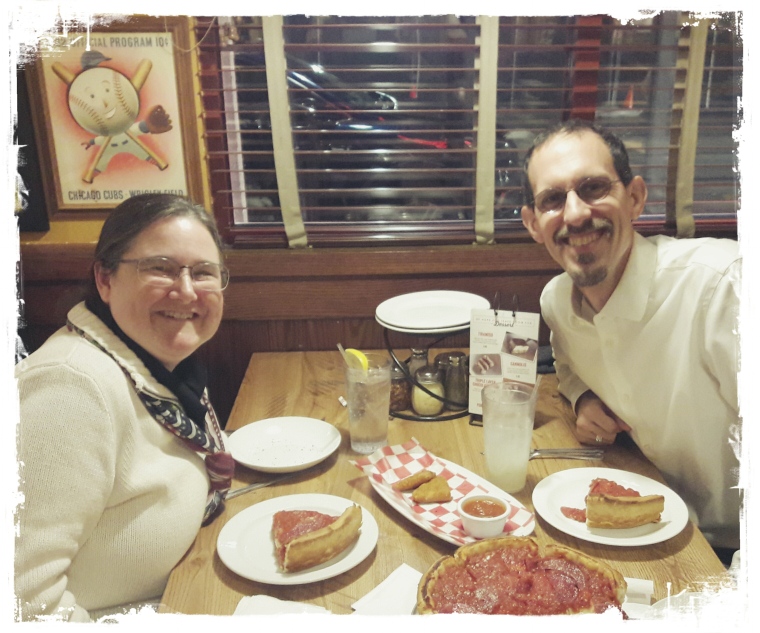
So it’s no wonder that as an adult I followed their example. And once the internet created the ability to meet and collaborate with strangers-who-become-friends, my string of scattered people became a web that now spans oceans. Since 2009, I’ve made a point of meeting up with writer-friends whenever family-travel brings me into close proximity. I’ve shared pints with Mel Bosworth, toured the Louvre with Dorothee Lang, dined in Beacon Hill with Tim Bridwell, took Yorkshire tea with Samantha Priestley…and New York City? Rose Auslander, Casey Tingle, Elizabeth J. Coleman, Paco Márquez… These meet-ups play a critical role in a key component of my writing life: creative kinship.
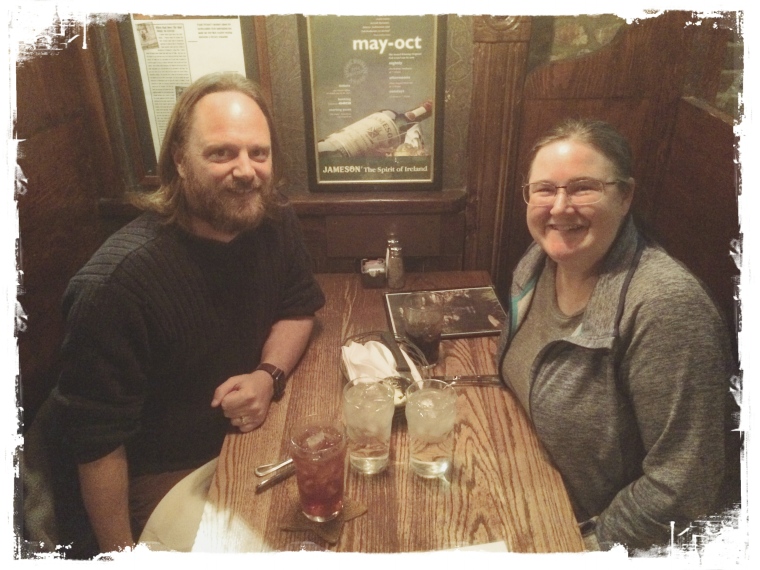
Creative kinship is what sparked the idea for my calligraphic treatment of Ben Moeller-Gaa’s haiku. His guidance on what is and isn’t appropriate for English-language haiku crossed-pollinated with my guidance on what is and isn’t reader-friendly book design. Our geeky discussions yielded a unique approach to a frequently mistreated poetic form. My practice of that approach over the course of four haiku poets’ collections has honed my calligraphic skills while giving me wabi-sabi instincts. Now I can’t write haiku to save my life, but I have enough awareness of their spirit to help another haiku/haibun poet, dt.haase, develop two works-in-progress. The only thing that could have beat dining with dt. one night and Ben the next on my latest train journey would have been for the three of us to dine together! Maybe someday…
I’m sure it’s possible to write in seclusion and only share work with faceless entities, but I can’t imagine it’s much fun. Working for a press out of my home, writing at a desk in my home — the internet makes these possible. Having to drive an hour+ to engage with poets in real life, however, sometimes leaves me isolated. The creative kinships I’ve developed over the years have opened up collaborations that have taught me skills I never would have gained on my own. And it’s the endorphins that come from these intense, trusting partnerships that carry me through the long, dark January nights when the roads are too icy to attend Writers Night Out…or Down Cellar Poets…or Boston Bookbuilders…
If you have grown thanks to creative kinships, please share in the comments. How did you meet? Have you ever met in real life? What works of art exist in the world now because of your creative kinships?
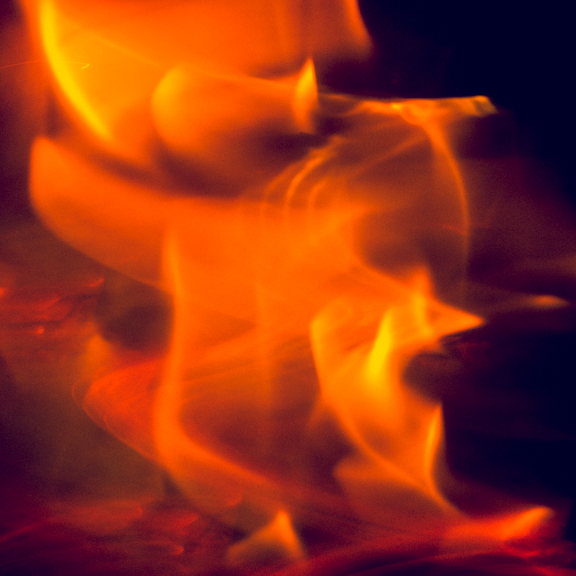
Last night I found out one of my childhood friends has no brain activity, but is still on life support. The news has left me distracted by the flames in our woodstove today: their gradual fade from tall yellow spires with blue arches to low orange bells, their surge back to yellow when my husband opens the damper, their decline into glowing coals once fuel is no longer added. As each log releases its energy to the fire, I wonder where the essence of Kim is — whether her soul is trapped on a hospital bed in Arkansas, or released to a cool Ozark breeze that will carry her home.
English doesn’t work for this. Its insistence on strict linear separation between past, present, and future makes it difficult to remember, let alone write about, someone caught between this world and the next. I’ve been fighting my internal dialog all day, forcing was into is the same way I did when my grandad’s dementia was at its peak. Verbs are loaded. The only safe Kim-words I can share right now are adjectives, nouns, and quotes — but only because I’ve stripped them of timeframe and explanation.
confidante
steady and gentle
“Why buy what you can make?”
church nursery
domestic artist
“That’s just not right.”
honor star
laughter
I’d like to tell you about the time she taught me how to make nuggets from whole chickens. Or the way she tolerated my teenage crush on her brother. But I’m afraid that too much past tense would slip out — the dangerous kind of past tense written with finality. A finality that’s too soon. A finality that isn’t right…won’t be right as long as Kim is.
I was supposed to go to my 30 year high school reunion this summer. For a variety of reasons I chose instead to wait until November to quietly visit my high school best friend who still lives in town. I hadn’t been back in 10 years. My family moved around a lot (they even moved to Africa after I graduated), so I have to make an effort to visit Missouri…and most of the time I don’t really feel the need. But after an intense week of touring New England with my Water Ways co-author in October, I was glad for a chance to sneak away.
I knew from Facebook that my old high school had just been demolished. I also knew from my last visit that my old house had burned down. What I didn’t know was that my church had been torn down and a used car lot built on the site. Having connected so readily to my new landscape in New Hampshire yet never connecting to my 16-year landscape in California, I often think about the concept of home — how there are places we feel it and places we don’t and how it doesn’t seem to depend on time lived in a place. Missouri is one of those places where I failed to connect. Where I lived and was known, but never fit.
Looking back 30 years later, a lot of the failure to connect was on me. The transition from northern Illinois to southern Missouri was tricky. There were different accents to contend with and a living situation that was more institutional than domestic. But after this last trip I think I’ve discovered the core issue: alienation from landscape.
My family was never the outdoorsy type, but when we lived in rural Illinois I was allowed to roam free. I had a secret hiding place in the drainage ditch beneath a mulberry tree. I could ride my bike down gravel roads lined with soybean and corn fields, and even cross the tracks to my friend’s sheep farm. I climbed well-placed limbs on mature lawn trees and did cartwheels in the grass. My family may not have gone outside, but I did. Because I could.
But in Missouri the landscape was different. Hostile. There were chiggers and ticks. There were no lawn trees to climb, just acres of scrubby woods so thick I couldn’t make a path. What little lawn existed was too hilly for cartwheels, and the drainage ditches were too steep and muddy to get up and down. When my family finally moved into town, I could at least escape to the park if the Hubble Creek ford wasn’t flooded. But I’d spent four prior years trapped, and they’d left their mark.
Which is too bad, really. We only lived a few miles from the Mississippi River and Trail of Tears State Park. On this trip, my friend took me to the river walk in front of the flood wall in Cape Girardeau so I could photograph the power of the Mississippi’s flow.

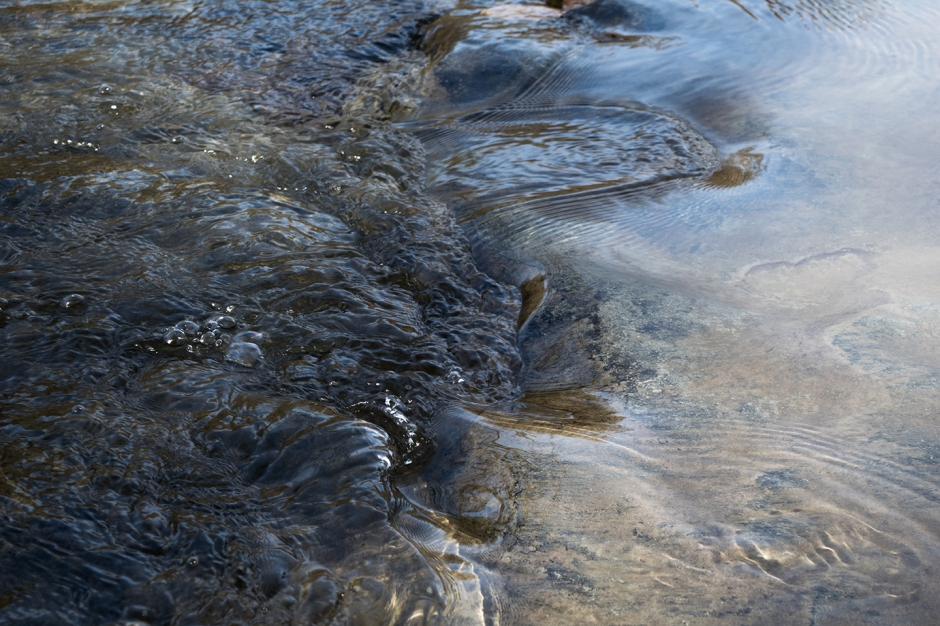
She also took me to a wilder section of Hubble Creek in Jackson, the same creek that ran behind the tennis courts where I spent countless hours hitting against the backboard. Surprisingly, the bed of Hubble Creek reminded me of the limestone pavements my husband and I recently walked in the Yorkshire Dales. The water was running, but calm enough to climb down the bank and photograph the texture of the water. I stepped across flat-topped rocks to reach the middle without getting wet. I noticed flow patterns and reflections and vegetation zones and flood markings.
I connected. Finally. And now I’m driven to return. Not just to continue investing in lifelong friendships, but to get reacquainted with the moods of Hubble Creek. To explore its swallowing of Goose Creek, Foster Creek, and Williams Creek. To watch it join the Castor River Diversion Channel. To then see those merged waters slide into the Mississippi River as it makes its way down to the Gulf of Mexico.
It had been there the whole time: Hubble Creek, my more-than-human connection point to a place I should have called home. It’s still there even though my house, my church, and my school are all gone. It will always be there, even if its course shifts or its inhabitants change. Because water always wins. Its power can be tempered or directed, but never tamed. And while I’m sad that it’s taken me this long to recognize the virtues of this humble creek running through a modest town, I’m relieved to have thought — for a moment — that it’s running through my town. My hometown.
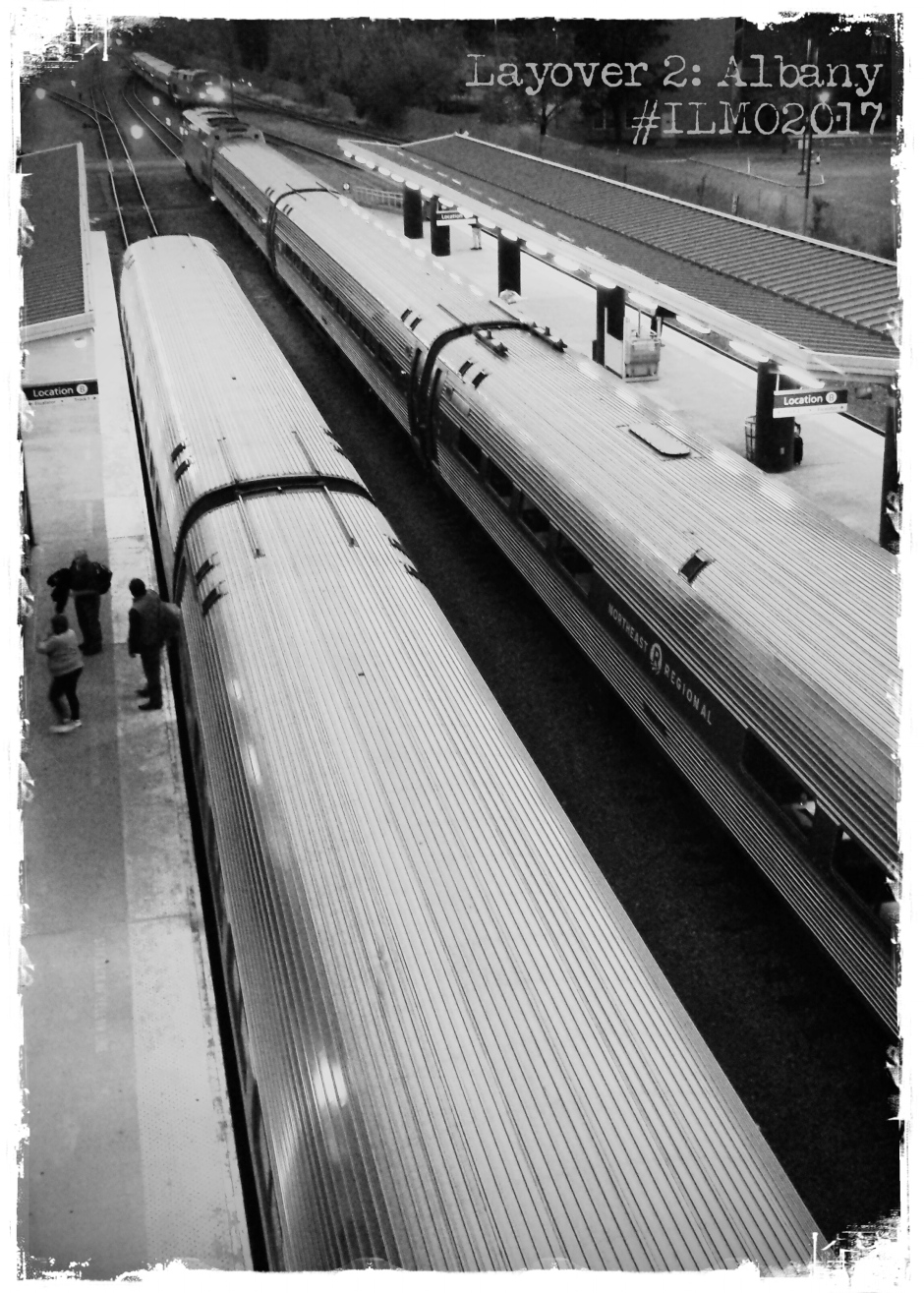
I am sitting on Amtrak 449 in the railyard just outside Toledo’s Martin Luther King Jr. Plaza. We are:
I know to expect this having taken the Lake Shore Limited before. This time I’m going with the flow. This time I have no kids with me and no connections to miss. I even snagged six hours of sleep. Sleep that was interrupted by the stops and starts of yeilding to freight trains. Interruptions that kept me from missing:
Maybe it is just this line, but I think there’s a tension between water and railroads. There’s so much water near these tracks and some of it is in full photogenic view. But much of it is obscured by defoliating trees or a moonless night or trestle beams…or a passing freight train. This is water that must be savored in the moment. It cannot be captured and made to fit in a frame – static perfection that can be counted on. Sometimes this water inundates these tracks : Sometimes these tracks impede this water. It’s a matter of perspective…
…just like Amtrak’s timetables. There may be an ideal hope printed on a brochure or posted on a website, but reality is never confined within those banks. Time on the rails spills out in uncharted directions, along tracks awash in relativity. This time I welcome it. I choose to enjoy the tea Rachel is serving. I watch for more hidden water. And I know that lunch in Chicago will be just as good as breakfast would have been.
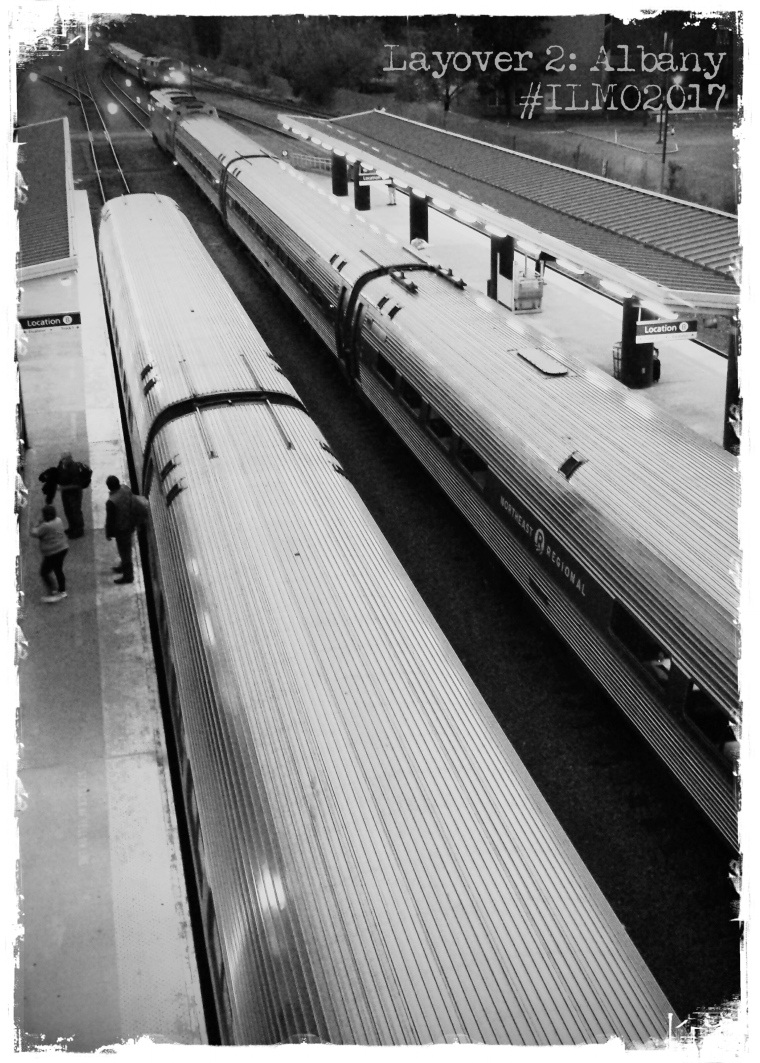
To see the moments I do manage to capture, visit my ILMO2017 album on Flickr or follow me on Twitter. This trip I’ve got a black & white series of phone pix going.
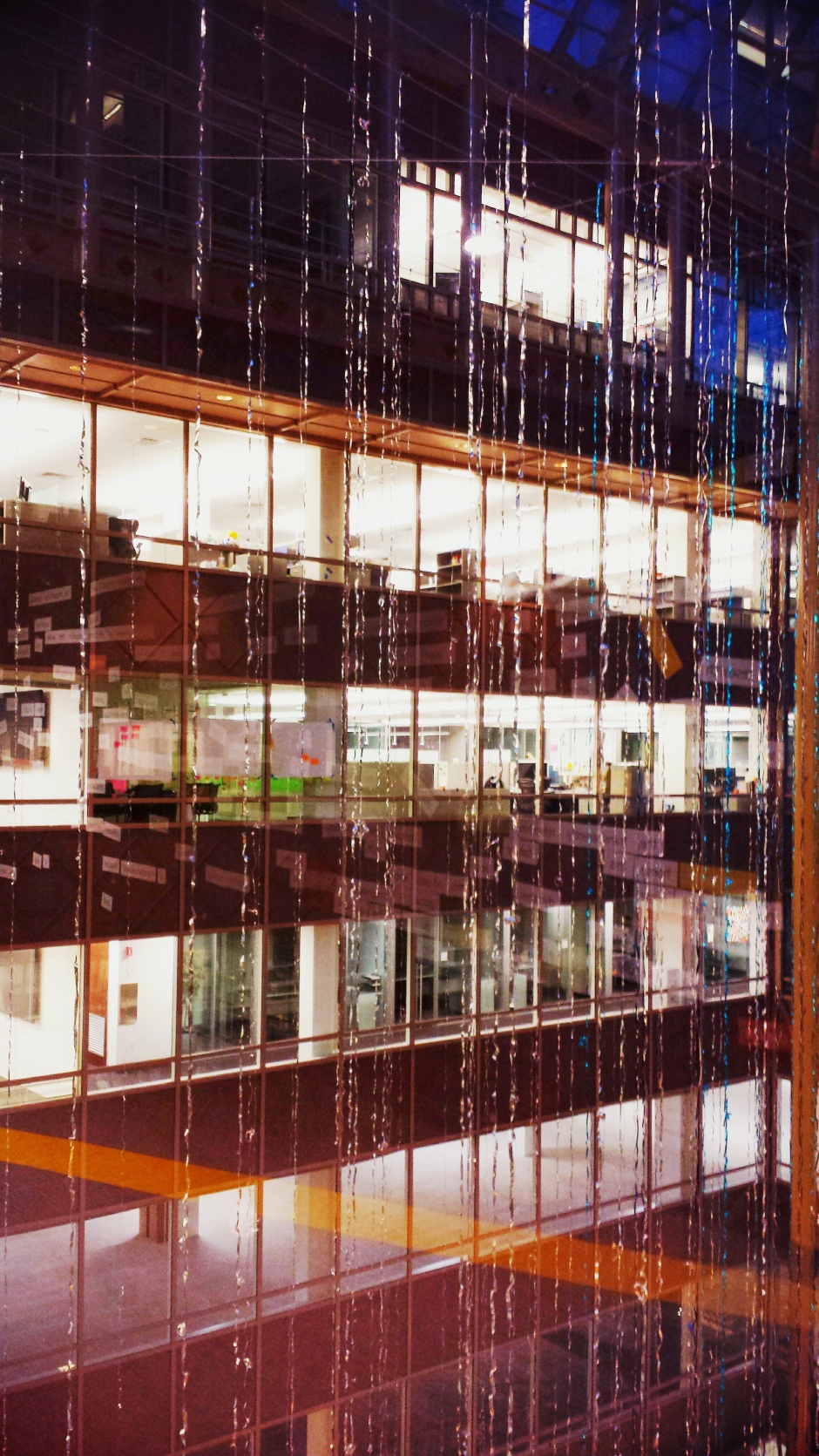

I would have said you needed tranquilizers. Yet last night, there I was in a place I would have killed to be 16 years earlier, just in a completely different role. And what a role I have now: Editor in Chief of Folded Word, exploring the world one voice at a time in little books that breathe. To come full spiral in a skyscraper on a blustery night in Boston after a week-long, tri-state book tour? Someone pinch me!
The panel was amazing, though I have to say I feel blessed that I don’t have to deal with large committees when getting cover and textblock designs approved. I couldn’t believe how many cover iterations some designers had to compose in order to get one that the editor, sales/PR/marketing, and the author could all agree on.
 Even more amazing to a type-geek like me was the type-specimen book that Cate Barr (Cengage Learning) brought. Hearing how she used to manually trace letters out of the book to compose an initial cover design reminded me of my days on the high school newspaper, mitering the corners of lined tape with an Xacto knife to make boxes for insets. VERY thankful to be designing books in the age of Adobe’s InDesign!
Big love to Bookbuilders of Boston for binding together all New England presses, regardless of size or budget.
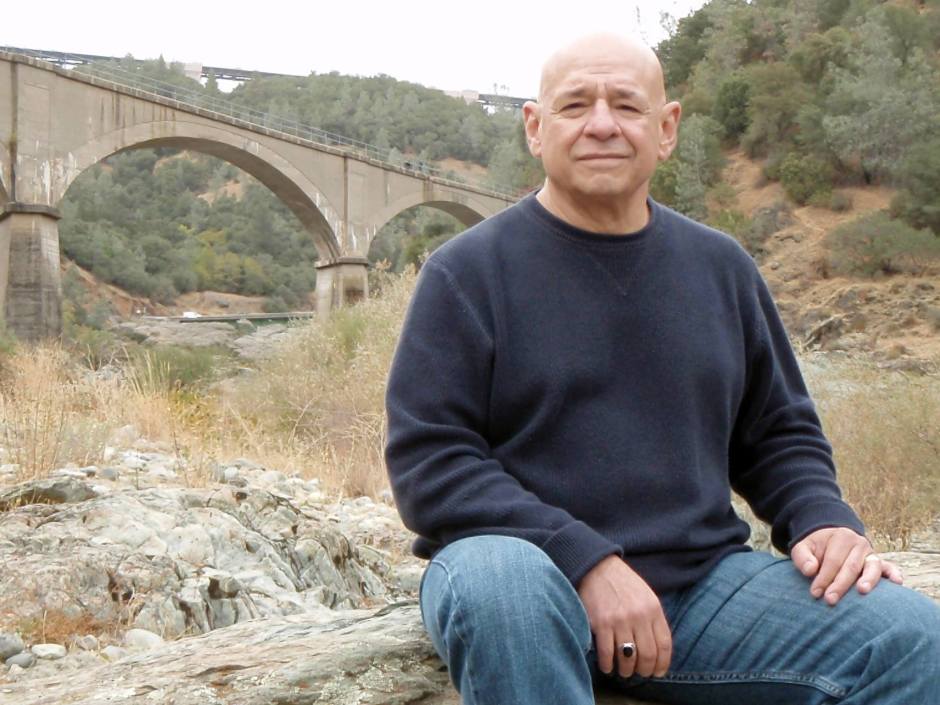
Very excited to be reading in New Hampshire with my mentor and friend, William O’Daly. The Griffin Free Public Library is a cozy, historic venue with a lovely group of patrons. Hope to see you there!

 Griffin Free is proud to present an evening of poetry about the New Hampshire landscape with California poet William O’Daly and Meredith, NH poet and illustrator JS Graustein.
The free event will take place on Wednesday, Oct. 18 at 6:30 pm at the library, 22 Hooksett Road, Auburn, NH 03032.
Join O’Daly and Graustein as they share their journey through water and words to write their collaborative book about New Hampshire’s blue spaces: “Water Ways” (Folded Word). Co-written by a tourist and a resident, the book explores the many ways we interact with landscapes – both familiar and foreign.
In addition, O’Daly will be reading excerpts from his latest translation of Pablo Neruda’s poetry: “Crepusculario / Book of Twilight” (Copper Canyon Press). Never before published in English, this collection of Neruda’s early poetry is a treat, as is O’Daly’s masterful translation of it.
 O’Daly and Graustein will be…
View original post 46 more words
So I think after yesterday’s feedback, we’ve ruled out Flickr as a water-clip host. I also did some digging and found tutorials on how to get better quality uploads to Vine and YouTube. In the process, I found out how to place text on the videos then get the edited version from my computer to my phone for upload to Vine.
Vine:
YouTube:
Any new thoughts?
I’m feeling the urge to share some of my recent explorations of waterways, but I’m wondering about the best way to share them. Which video solution do you like best?
Vine seems to have poor resolution (even though my original is fine, even on my big computer screen), but it plays in a fun continuous loop and is easy to turn the sound on/off:
YouTube gives the full view (not cropped square like Vine) but seems to have poor resolution too, and then you also get the “next video” and ad things popping up:
‘
Flickr seems to have the best resolution, though still not great. Plus its playback window is tiny and can’t be customized. However if you’re my friend on Flickr, you can go to the site and download the video to see it crisp and clean.
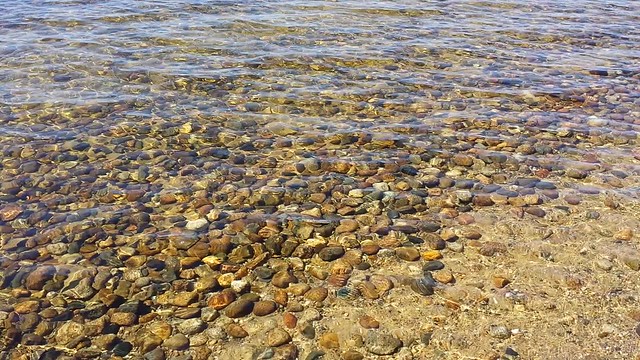
Feedback? Opinions? Help!
 Grayestone Lodge